Details & Abstract
A 2-Day Intensive Workshop on Parallelization with MPI, by Prof. Sudip Garain. This workshop introduced participants to parallel computing and high-performance programming. The workshop combined theoretical concepts with hands-on MPI exercises, covering communication protocols, scalability and scientific computing applications.
What Happened
Singularity organized a two-day intensive workshop titled “Parallelization with MPI”, conducted by Prof. Sudip K. Garain. Held from 10:30 AM to 4:30 PM across 2 days, the workshop witnessed enthusiastic participation from over 80 students, ranging from first-year undergraduates to research scholars.
The sessions began with an introduction to the concept of parallelization, described as the partitioning of computational work to improve efficiency. Participants were guided through fundamental ideas such as task and data parallelization, followed by an overview of different parallel computing frameworks including OpenMPI, OpenACC and CUDA. The workshop then introduced the basics of MPI (Message Passing Interface), with hands-on demonstrations conducted in a Linux environment, allowing students to gain practical exposure alongside theoretical understanding.
As the workshop progressed, participants explored key MPI concepts such as point-to-point communication (send and receive), blocking and non-blocking operations, and collective communication methods like broadcast, gather and reduction. These ideas were illustrated through practical examples, including numerical computations such as summing large datasets and estimating the value of π using the Monte Carlo method. The sessions also addressed important aspects of performance, including speedup, scalability and the limitations of parallelization, with a discussion on Amdahl’s Law highlighting the impact of inherent serial components in programs. The workshop concluded with practice exercises and discussions on best practices in parallel programming, followed by an interactive question-and-answer session. Overall, the event provided participants with valuable insights into high-performance computing and its applications in scientific research.
Speaker / Author
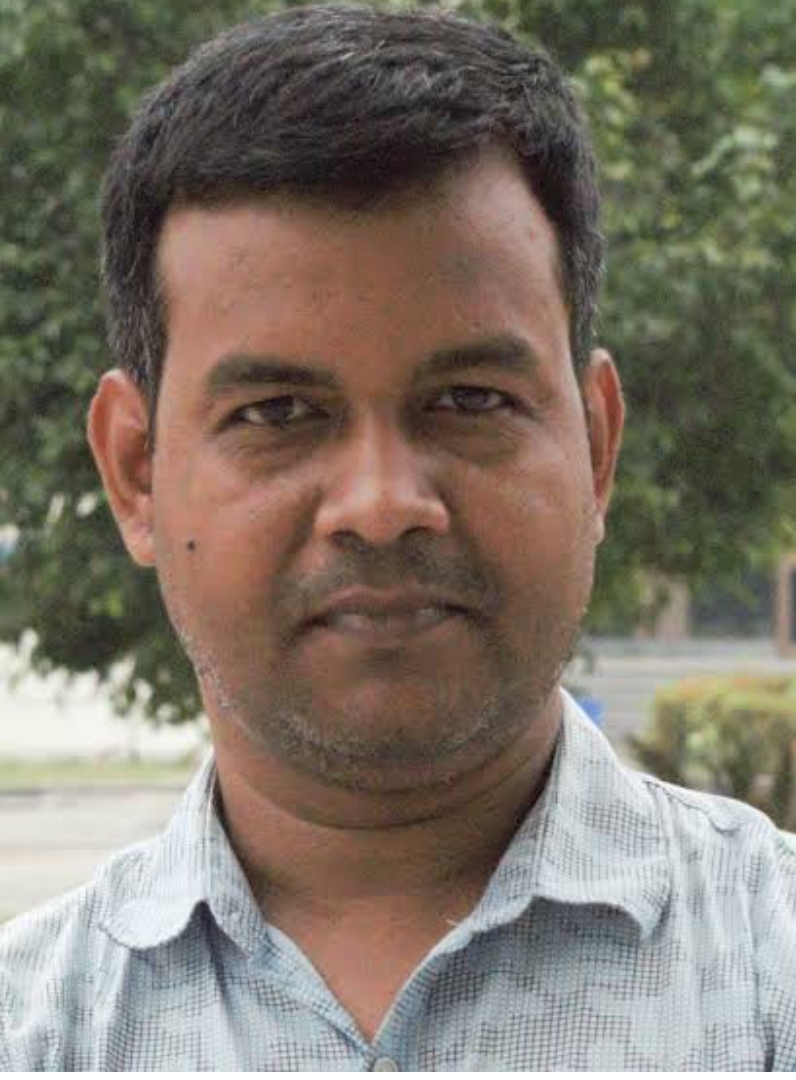
Prof. Sudip K. Garain, an Assistant Professor at the Department of Physical Sciences, IISER Kolkata. He is also affiliated to CESSI. He is a computational astrophysicist by training and has deep interest in developing numerical algorithms, writing simulation codes and apply those to relevant physics and astrophysics problems. His primary research interest is studying the dynamics and radiative properties of astrophysical plasma.